Events
Bioinformatics Day on the 6.6.2025 in BioCity Turku
Stay tuned for more information!
The Next BioBeer is happening in March 2025!
Join us for an amazing event with special talks, networking opportunities, and, of course, beer!
Turku – Fri 7th of March at 18: Saaristobaari, Aurakatu 14, Turku. Discounts for foods and drinks at BioBeer events.
Helsinki – Thu 6th of March at 18: To be announced later
Helsinki BioBeer aims to try different restaurants and bars at each BioBeer. Suggest a place for the next Helsinki BioBeer here: https://link.webropolsurveys.com/S/54EAE005F8199416
The Bioinformatics Hackathon in TURKU 11th of MARCH @ 15
NEXT: 8th of APRIL , 15th of MAY, 3rd of JUNE
The Finnish Society for Bioinformatics is excited to host beginners Bioinformatics hackathon in collaboration with InFlames Research Flagship and CompLifeSci in Turku during spring 2025.
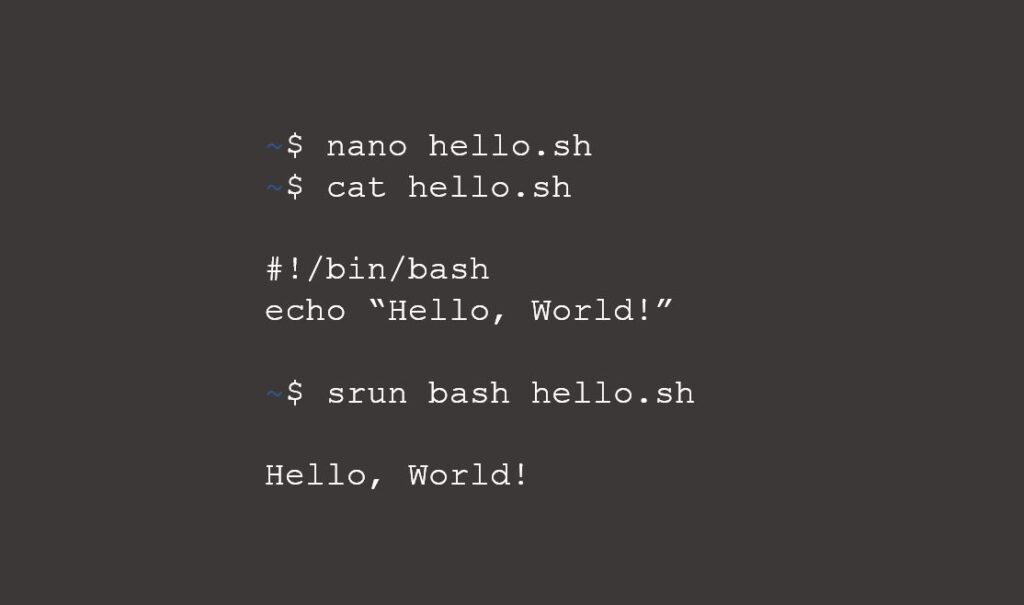
The beginners Bioinformatics hackathon is aimed for everyone interested in Bioinformatics – no prior coding experience is needed. The hackatons are low threshold, fun events to get everyone as excited of bioinformatics as we are. We will cover topics like Linux command line, Git, workflows, and containers.
No registration needed, just appear in BioCity 4th floor seminar room and bring your laptop, you might end up writing your first line of code!

The Bioinformatics Webinar 6th of March 2025 @ 14
NEXT: 8th of APRIL , 15th of MAY, 3rd of JUNE
Topic: KMAP: Kmer Manifold Approximation and Projection for visualizing DNA sequences
Abstract
Identifying and illustrating patterns in DNA sequences is a crucial task in various biological data analyses. In this task, patterns are often represented by sets of kmers, the fundamental building blocks of DNA sequences. To visually unveil these patterns, we could project each kmer onto a point in two-dimensional (2D) space. However, this projection poses challenges due to the high-dimensional nature of kmers and their unique mathematical properties. Here, we established a mathematical system to address the peculiarities of the kmer manifold. Leveraging this kmer manifold theory, we developed a statistical method named KMAP for detecting kmer patterns and visualizing them in 2D space.
We applied KMAP to three distinct datasets to showcase its utility. KMAP achieved a comparable performance to the classical method MEME, with approximately 90% similarity in motif discovery from HT-SELEX data. In the analysis of H3K27ac ChIP-seq data from Ewing Sarcoma (EWS), we found that BACH1, OTX2, and ERG1 might affect EWS prognosis by binding to promoter and enhancer regions across the genome. We also found that FLI1 bound to the enhancer regions after ETV6 degradation, which showed the competitive binding between ETV6 and FLI1. Moreover, KMAP identified four prevalent patterns in gene editing data of the AAVS1 locus, aligning with findings reported in the literature.
These applications underscore that KMAP could be a valuable tool across various biological contexts.